
In a new study, scientists at the University of Illinois Urbana-Champaign partnered with Bond Pet Foods to examine the effects of chicken protein produced using precision fermentation on the digestive health of dogs.
First, Bond’s R&D team identified proteins that are highly abundant in the muscle tissues of chickens, and determined their DNA sequences. The DNA was inserted into the genome of brewer’s yeast to express the chicken protein, which was cultivated in large stainless-steel tanks.
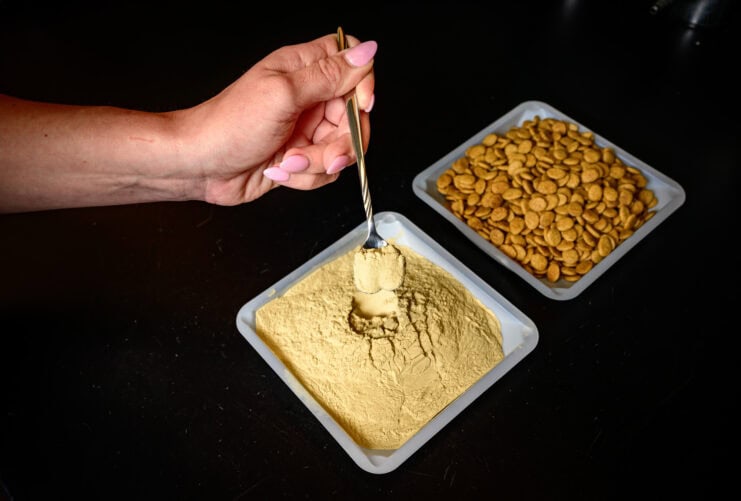
After cultivation, the culture medium was removed and the biomass was harvested, heat-treated, and spray-dried to produce chicken protein. This protein was formulated into kibble and fed to 32 healthy adult dogs over a six-month period.
In an initial two-week acclimation phase, all the dogs ate a control diet made with ingredients commonly used in commercial pet food. They were then divided into four groups; three were randomly assigned to eat a diet containing 15%, 30%, or 40% brewed chicken protein, while the fourth group remained on the control diet.
“Safe, effective, and sustainable”
The dogs who ate the brewed protein were found to have beneficial changes in their fecal metabolites and gut microbiota, with no allergic reactions or adverse changes in blood chemistry, weight, or other markers. The researchers conclude that the brewed chicken protein is safe and nutritious for use in dog food at proportions of up to 40%.
All four groups’ diets contained similar levels of organic matter, ash, crude protein, and fat, and all were fed amounts intended to maintain their body weight. The brewed protein did seem to decrease the digestibility of fats somewhat, but they remained highly digestible overall. Furthermore, fecal concentrations of the short-chain fatty acids butyrate, propionate, and valerate, which have beneficial effects such as reducing inflammation, rose in proportion to the amount of brewed chicken protein in the dogs’ food.
The news comes after Bond Pet Foods partnered with Wilbur-Ellis Nutrition, a provider of animal nutrition solutions, to develop tailored, non-animal-derived ingredients for pet food applications. The collaboration began last year, with the aim of formulating innovative pet food products with improved nutritional value and enhanced benefits.
“We’re thrilled to see such positive results from the University of Illinois study,” said Tomas Belloso, vice president of regulatory affairs at Bond Pet Foods. “It reinforces the promise of brewed chicken protein as a safe, effective, and sustainable option for pet nutrition.”