US biotech Ayana Bio and Israeli fermentation company Brevel have received a $1.25 million grant from Israel’s BIRD Foundation to investigate whether Brevel’s light-integrated fermentation technology can improve output in plant cell culture systems.
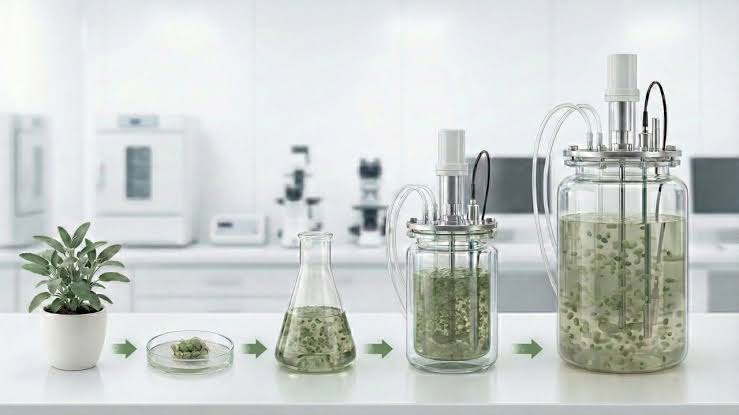
Ayana Bio, a Boston-based spinoff from Ginkgo Bioworks, grows plant cell lines in bioreactors to produce high-value botanical ingredients, with current development focused on sage for rosmarinic acid, saffron for crocins, and marigold for zeaxanthin and lutein. Brevel, founded in Israel by the three Golan brothers, combines sugar-based fermentation with LED lighting in a single system to grow chlorella biomass, proteins, and lipids.
Testing light as a lever
The research will examine whether light can serve as an additional variable in plant cell culture. As Ayana Bio CEO Frank Jaksch told AgFunderNews, the company had previously avoided using light in its process due to the absence of scalable solutions. “Now that Brevel has been working on scalable lighting options for large tanks, we would like to explore the use of light as an additional variable to improve plant cell growth and bioactive production.”
Brevel CEO Yonatan Golan noted the collaboration sits within a broader push into plant cell culture. “We have had very nice successes already with cocoa and coffee, and beside the work with Ayana Bio we have additional partners we are now signing with,” he told AgFunderNews.
The scale problem
Ayana Bio is targeting commercial scale for rosmarinic acid in 2026 and is finalizing its first GRAS dossier for FDA submission. Jaksch was direct about the wider challenge facing the sector: “There is no cheat code or garage lab way of achieving commercial scale, it requires a significant amount of time, resources and cash to get there.”