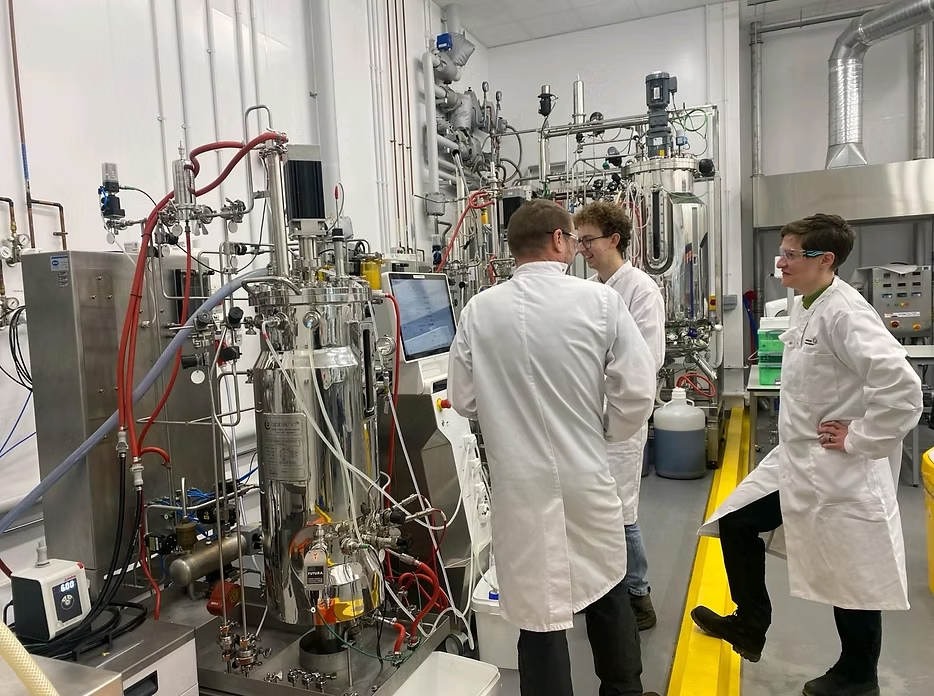
Oxford-based biotech startup Sun Bear Biofuture has completed its first production run using a custom-built pilot plant designed to manufacture a cocoa butter alternative via yeast fermentation, at a setup cost of £25,000 — a fraction of the £350,000 to £1 million typically required for conventional precision fermentation facilities.
A low-cost route to scale
The pilot plant, which is automated and end-to-end, has production capacity for dozens of kilograms per month. According to the company, the fermentation tank alone cost under £1,000, compared to an industry standard cost of £250,000 or more. The reduced capital expenditure was achieved partly by adapting brewery and dairy equipment already available on the market, and by redesigning the downstream processing of yeast biomass to eliminate several standard pieces of equipment.
CEO Ben Wilding stated, “Proving our low capex expansion plan was a key goal for this year, and we’ve smashed it. We are now working with a globally renowned cosmetics company to launch our planet-friendly cocoa butter alternative in their range next year, which will be the real pinnacle of our efforts over the past 4 years.”
Cocoa butter costs and supply pressure
According to the company, cocoa butter prices increased sixfold in 2025 amid sustained supply volatility, intensifying industry demand for alternatives with more stable supply chains. Sun Bear Biofuture says its fermentation-derived ingredients cut land use by up to 95% and reduce carbon emissions by 90% compared to tropical equivalents such as palm oil and cocoa butter.
The company reached a cell lipid content of 78% in 2024, meaning nearly four-fifths of the yeast cell mass consists of fat, which it says has been key to driving down production costs and enabling the push toward scale-up.
Sun Bear Biofuture has received Innovate UK funding to conduct reformulation trials with a major high-street cosmetics brand in partnership with the University of the Arts London. Those trials have shown no performance difference between its yeast-derived ingredient and conventional cocoa butter. Sensory testing with the Centre for Nutrition and Health at Oxford Brookes University is scheduled for June.
The company is targeting a demonstration plant for 2027, with capacity for hundreds of tonnes annually, and industrial-scale production by 2029.
“The scope to meet customer demand for stable supply chains by producing our cocoa butter and oil range locally, whilst dramatically reducing the impact the industry has on the planet is hugely exciting,” Wilding added.