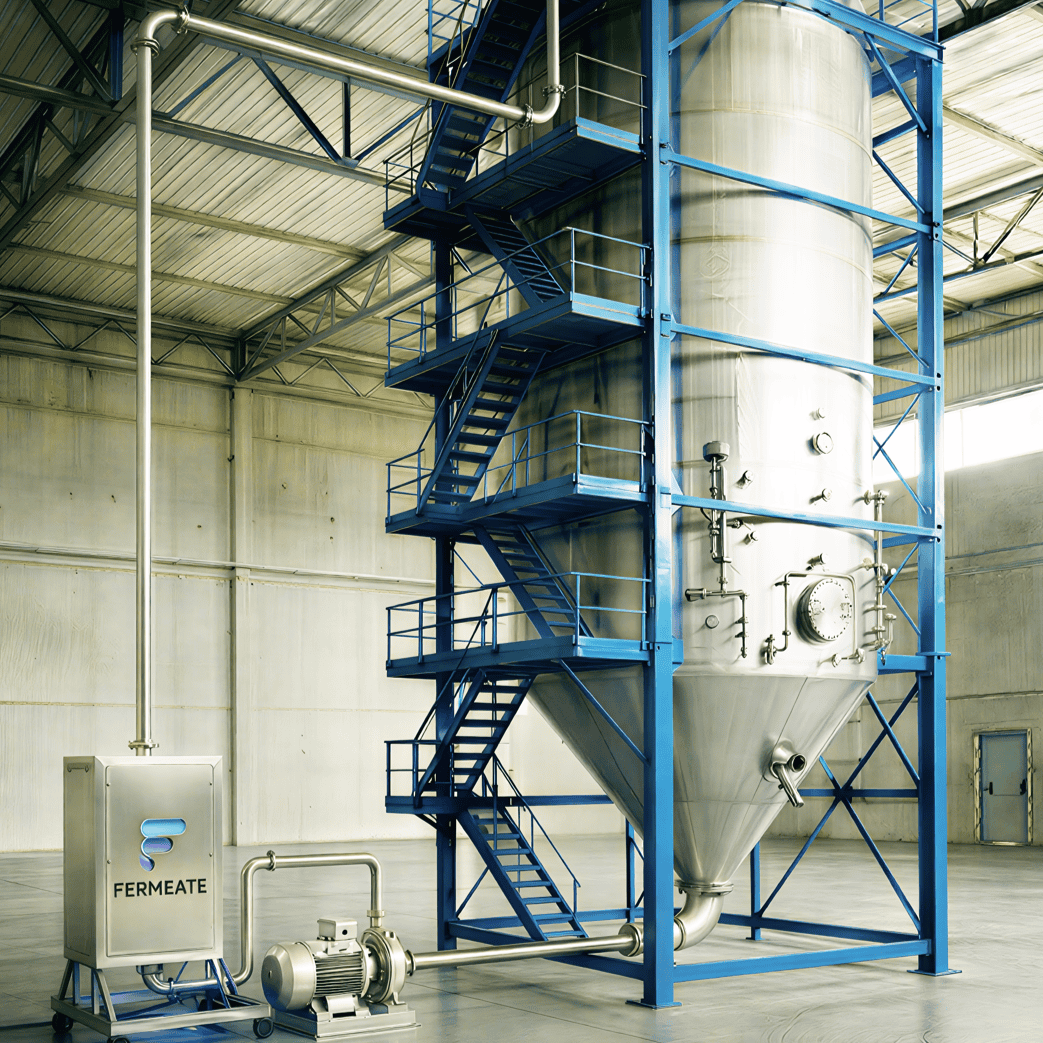
California-based startup Fermeate has raised $2 million in seed funding to scale its optogenetics platform, which uses light signals to control gene expression inside microbial cells during fermentation. The round was led by Newfund Capital, with participation from SOSV and Ajinomoto Group Ventures.
The technology inserts light-sensitive proteins into microbial strains, enabling manufacturers to activate or deactivate specific genes in real time. A targeted promoter directs which enzyme or protein is regulated. As co-founder and CTO Saurabh Malani explained to AgFunderNews, “First you put in a light sensitive protein, which makes any strain light-controllable, and then you put in a promoter, which lets us target exactly which enzyme or protein we want to be controlled.”
A plug-and-play approach to existing infrastructure
Rather than requiring new bioreactors, the system connects externally to existing fermentation tanks via a light-delivery device. Fermeate reports a typical payback period of under 11 months based on third-party technoeconomic analyses, and has already partnered with four global food and ingredient companies, achieving up to a 200% increase in protein production within six months, according to AgFunderNews.

The platform also tackles genetic drift, whereby microbial strains can lose up to 50% of their efficiency during a production run. AI and machine learning are used to determine optimal light patterns, sustaining output and eliminating bottlenecks in protein synthesis. Producers can also switch to cheaper feedstocks and remove chemical inducers such as methanol from their processes.
Cost reduction is a persistent challenge across the precision fermentation sector, and technologies that improve output from existing capacity rather than requiring new build-out are drawing attention from ingredient producers and investors alike. Fermeate is currently generating revenue through paid pilots while evaluating longer-term commercial models.
“Every major industrial transformation is built on a foundational infrastructure layer, and the bioeconomy will be no exception,” CEO Kevin Xu told AgFunderNews. “If we can get this control layer right, we can make biomanufacturing just as efficient as any other type of manufacturing.”