Atlantic Fish Co and Revo Foods have entered a collaboration to develop hybrid seafood products that combine cultivated whitefish cells with mycoprotein-based structuring technology. The two companies are testing whether mycoprotein matrices can be used as a scalable platform to support cultivated cell integration for whole-cut seafood formats.
“More than 80% of whitefish products are consumed as whole cuts”
Atlantic Fish Co, based in North Carolina, has developed proprietary whitefish cell lines and tissue engineering processes. Austrian startup Revo Foods contributes its 3D food extrusion platform and industrial mycoprotein production capability to the project. The partnership focuses on combining these technologies to create seafood alternatives that resemble traditional whole-cut fish in structure, texture, and flavor.
“More than 80% of whitefish products are consumed as whole cuts,” said a spokesperson involved in the collaboration, noting the format’s relevance to both consumer expectations and market viability.
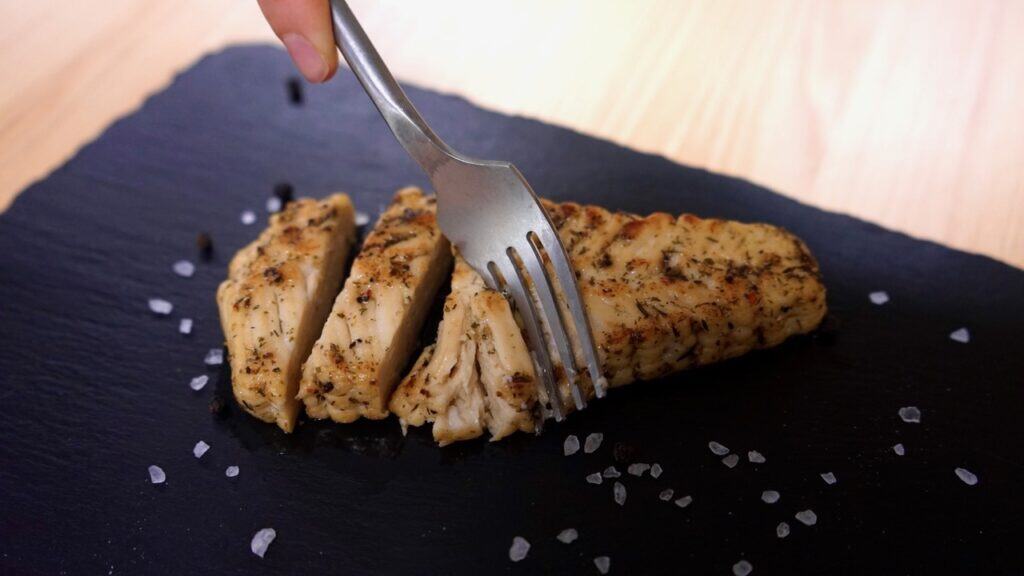
Revo Foods’ existing product, “EL BLANCO – Inspired by Black Cod,” already utilizes layered protein structures to mimic conventional fish textures. Within the scope of the collaboration, this platform is being used to test the integration of Atlantic Fish Co’s cultivated cells. The tests are intended to assess not only the technical feasibility but also economic efficiency and sensory characteristics of the resulting products.
Addressing structural and cost challenges
The hybrid model is designed to overcome one of the key technical limitations of cultivated seafood: creating structured, whole-cut formats that can be produced at scale. Fully cultivated products have faced ongoing challenges with texture replication and production cost. Mycoprotein, a fungi-derived protein that is already manufactured at industrial scale, serves as a carrier matrix that could reduce the overall volume of cultivated material required, potentially lowering production costs.
Atlantic Fish Co previously raised $1.2 million in seed funding at the end of 2025. Revo Foods, which began operations in 2021, reportedly doubled its sales last year and expects to reach profitability by the fourth quarter of 2026.
Both companies are exploring hybrid alternatives as a means of addressing production bottlenecks and accelerating commercialization of structured seafood analogues. Products developed through this model are expected to offer a compromise between cell-based innovation and the scalability of existing protein processing technologies.