
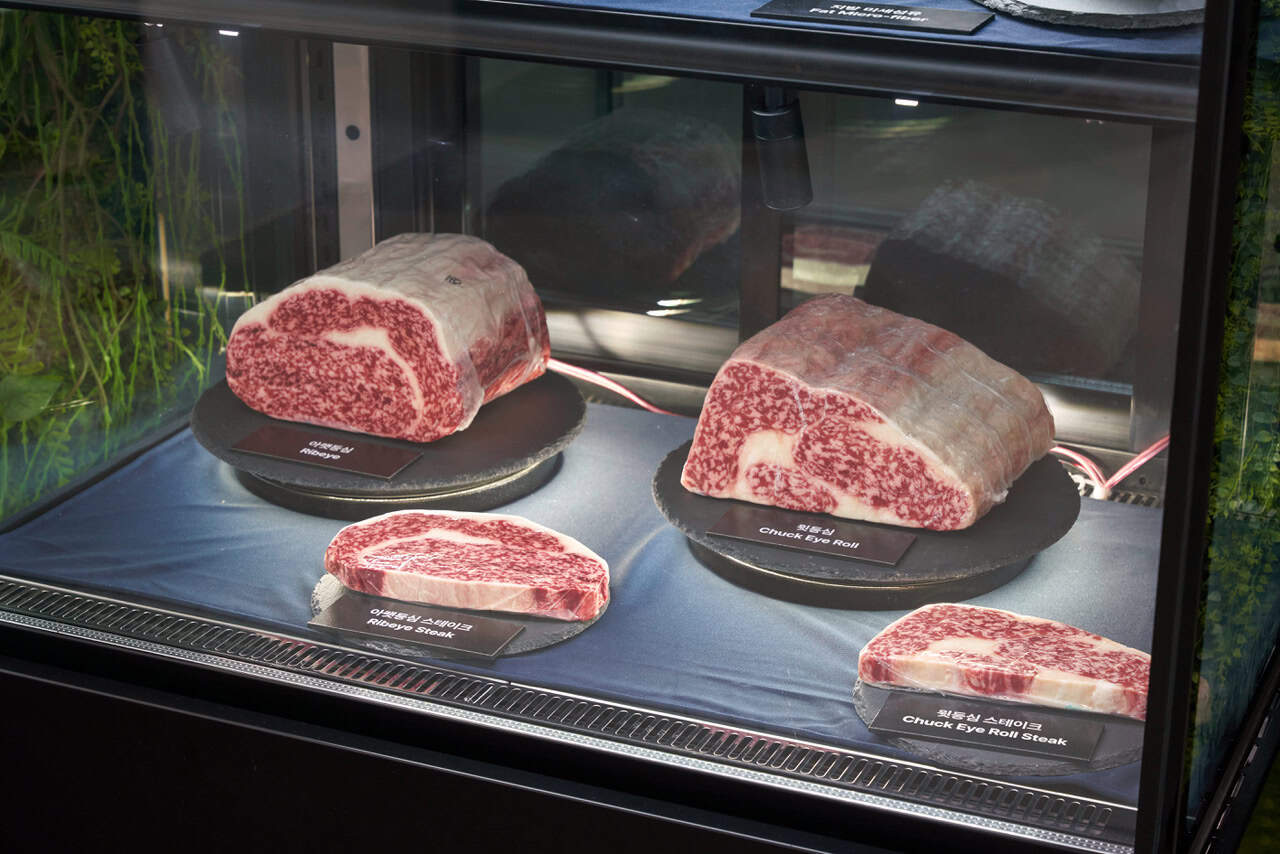
TissenBioFarm Develops Cultivated Meat Matching Cell Density of Real Meat
South Korean cellular agriculture company TissenBioFarm has announced that it has developed cultivated meat with a cell density equivalent to, and in some cases exceeding, that of conventional meat. The company claims this development marks the first time cultivated meat has reached this benchmark using tissue engineering methods. Cell density remains a key technical challenge The result addresses a long-standing technical limitation in the cultivated meat sector. Many products under …
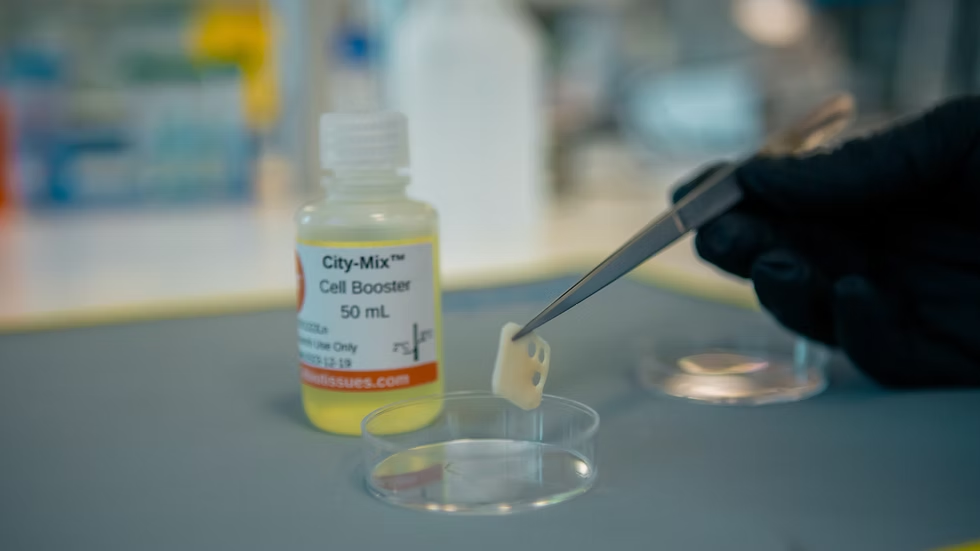
South Korea’s SeaWith Partners with 3D Bio-Tissues to Lower Cultivated Meat Costs
UK-based biotech company 3D Bio-Tissues (3DBT), a subsidiary of BSF Enterprise PLC, has signed a commercial supply agreement with South Korean cultivated meat developer SeaWith. The deal will see 3DBT supply its proprietary cell culture supplement, City-Mix®, to support SeaWith’s cultivated beef production. £300,000 deal to support scale-up The agreement, valued at approximately £300,000, establishes a regular shipment of City-Mix® to SeaWith. The product is designed to improve cell growth …
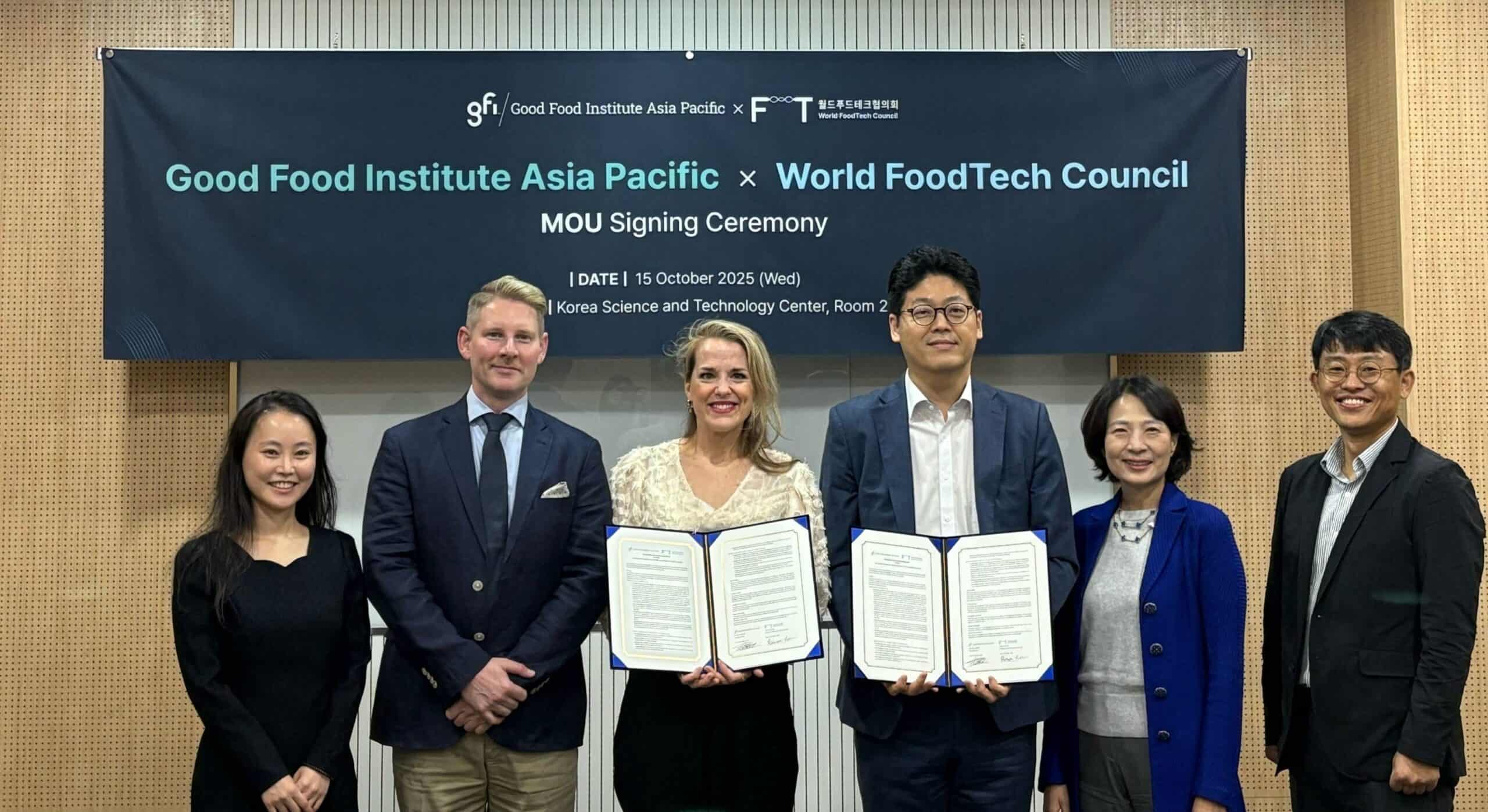
South Korea’s Push for Alternative Proteins Gets a Boost with New Bilateral Agreement
The World FoodTech Council and the Good Food Institute Asia Pacific (GFI APAC) have entered a bilateral partnership aimed at advancing South Korea’s growing alternative protein sector. The collaboration, announced today in Seoul, focuses on enhancing domestic research and development (R&D) efforts and shaping regulatory frameworks for novel foods. At a signing ceremony attended by GFI APAC CEO Mirte Gosker and World FoodTech Council co-chair Prof. Ki Won Lee, the …

Korean Scientists Develop Marbled Cultivated Meat Using Self-Healing Scaffolding Technology
Researchers in Korea have developed a scaffolding technology for achieving precise marbling patterns in cultivated meat at scale. In a new paper, they describe the use of self-healing hydrogels containing boronic acid-conjugated chitosan. This achieves robust reversible bonding at a neutral pH, unlike conventional hydrogels which require nonphysiological conditions for strong, reversible bonding. Each hydrogel variant optimizes mechanotransduction (the conversion of a mechanical stimulus into chemical activity) for the differing …

South Korea’s INTAKE Secures $9.2M for Alt Proteins Made With Yeast-Based Precision Fermentation
INTAKE, a South Korean food tech company using yeast-based precision fermentation to produce alternative proteins, has raised KRW 13.5 billion (US$9.2 million) in Series C funding. The round was led by CJ Investment, HB Investment, Woori Venture Partners, KDB Industrial Bank Capital, J Curve Investment, and Wonik Investment Partners. INTAKE plans to use the funding for R&D and global infrastructure expansion for its microbial-based alternative protein business. Super-protein yeast strain …

Simple Planet Moves Closer to Halal Certification with New Serum-Free Technology
Seoul-based startup Simple Planet announced the will pursue Halal certification for its cell-based food products, as part of its strategy to tap into the global Halal market. This initiative comes on the heels of a recent collaboration with the Halal Science Center (HSC) at Chulalongkorn University in Thailand, formalized through a Memorandum of Understanding (MOU) signed last month. The partnership hopes to facilitate the certification process for cell-based products and …

South Korea Invests $10M in New Cultivated Meat Research Center
South Korea is investing US$10 million (₩14.5 billion) in the construction of a new cultivated meat research center in Uiseong County, North Gyeongsang Province. This includes around $3.6 million in state funding, with the remainder provided by the county and province. The capital will be deployed over a three-year period extending from 2025 until the expected completion of the facility in 2027. Claimed to be the first of its kind …

Simple Planet Plans to Achieve Halal Certification After Signing MoU With Halal Science Center Chulalongkorn University
South Korean biotech startup Simple Planet has signed a memorandum of understanding (MoU) with the Halal Science Center at Thailand’s Chulalongkorn University. Through the partnership, Simple Planet and the Center will conduct joint halal science and technology research. They will also share laboratory and human resources, organizing joint academic activities such as conferences and seminars in halal science and technology. The collaboration signifies Simple Planet’s commitment to establishing halal Good …

Simple Planet Unveils Serum-Free Cell Culture Medium, Slashing Costs by 99.8%
South Korea-based alternative protein company Simple Planet has announced the development of a patented, serum-free cell culture medium designed for use in cell-based food production, biopharmaceuticals, and regenerative medicine. The medium, created through probiotics recycling, is expected to launch globally in 2025. According to the company, the formulation could reduce production costs by over 99.8% compared to conventional media. By replacing fetal bovine serum (FBS) with probiotics-derived metabolites, the medium …

New Tri-Party Initiative Launches to Accelerate Cultivated Meat in South Korea Ahead of 2025 Market Launch
The Good Food Institute APAC (GFI APAC), the Korea Biotechnology Industry Organization (KoreaBIO), and the Bio-based Future Food Industry Committee (BFFIC) have joined forces to accelerate novel proteins in South Korea. The partnership was formalized in a memorandum of understanding (MOU) ceremony in Seoul, attended by GFI Founder and President Bruce Friedrich, KoreaBIO Vice President Seung-kyou Lee, and BFFIC President Dominic Jeong. As part of the MOU, the organizations will …