One of Germany’s most respected scientific institutions is lending its bioprocess engineering expertise to the cultivated meat sector, in a new collaboration that could help bridge the gap between laboratory-scale cell cultivation and full industrial output.
The Max Planck Institute for Dynamics of Complex Technical Systems in Magdeburg has entered into a formal research partnership with Rostock-based startup Innocent Meat under a project titled “Cellular Agriculture and Process Intensification” (ZELPI). The collaboration brings together Innocent Meat’s proprietary cell cultivation know-how with the Max Planck team’s decades of experience in process intensification, a discipline more commonly applied to pharmaceutical manufacturing and viral vaccine production.
Applying vaccine-scale precision to food
The Magdeburg research team, led by Professor Dr. Yvonne Genzel and M.Sc. Jan Küchler from the Bioprocess Engineering Research Group headed by Prof. Dr.-Ing. Udo Reichl, has built an internationally recognised track record in scaling virus yields for vaccine production using high-cell-density perfusion culture techniques. The ZELPI project will see these same methods applied to the challenge of maximising cell concentrations for food applications.
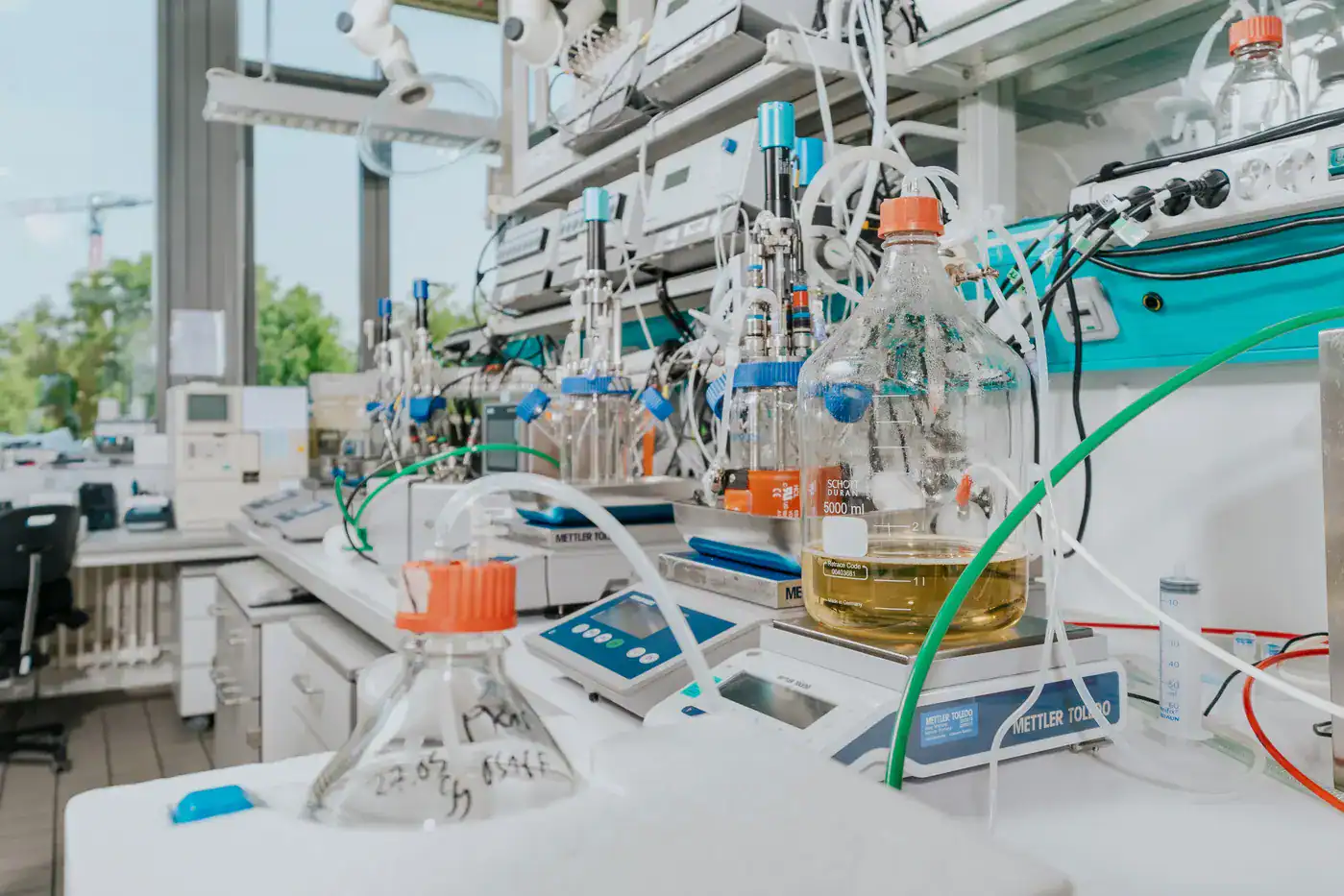
Under the arrangement, the Magdeburg scientists will take on Innocent Meat’s existing cell lines, cultivation media, and early-stage process protocols, then run them through the institute’s reactor systems and cell retention devices. The aim is to compare results, identify inefficiencies, and ultimately push cell yields significantly higher.

Innocent Meat, which was founded in 2020 by Laura Gertenbach and Patrick Inomoto and secured €6 million in new financing in January 2026, is developing an automated end-to-end production platform designed to allow conventional meat processors to transition into cell-based production with minimal internal R&D overhead. The ZELPI project feeds directly into that ambition by developing the biotechnological building blocks required for genuine industrial-scale output.
Federal funding backs the two-year push
The project is backed by Germany’s Federal Ministry for Economic Affairs and Energy (BMWE) through its “Industrial Bioeconomy” special funding programme, Component A, which is specifically designed to support joint ventures between industry partners and research institutions. The Max Planck Institute in Magdeburg will receive approximately €285,000 over the two-year project duration.
The funding reflects a broader push within Germany to position itself at the forefront of cellular agriculture research. The country is already home to a growing cluster of cultivated meat activity, with companies such as Innocent Meat and institutions like the Max Planck Society increasingly collaborating across the public-private divide.
Beyond its immediate application, the research group sees the ZELPI project as an opportunity to expand its technical repertoire into food biotechnology more broadly, with findings expected to inform future work across a range of cell types, products, and biotechnological applications.