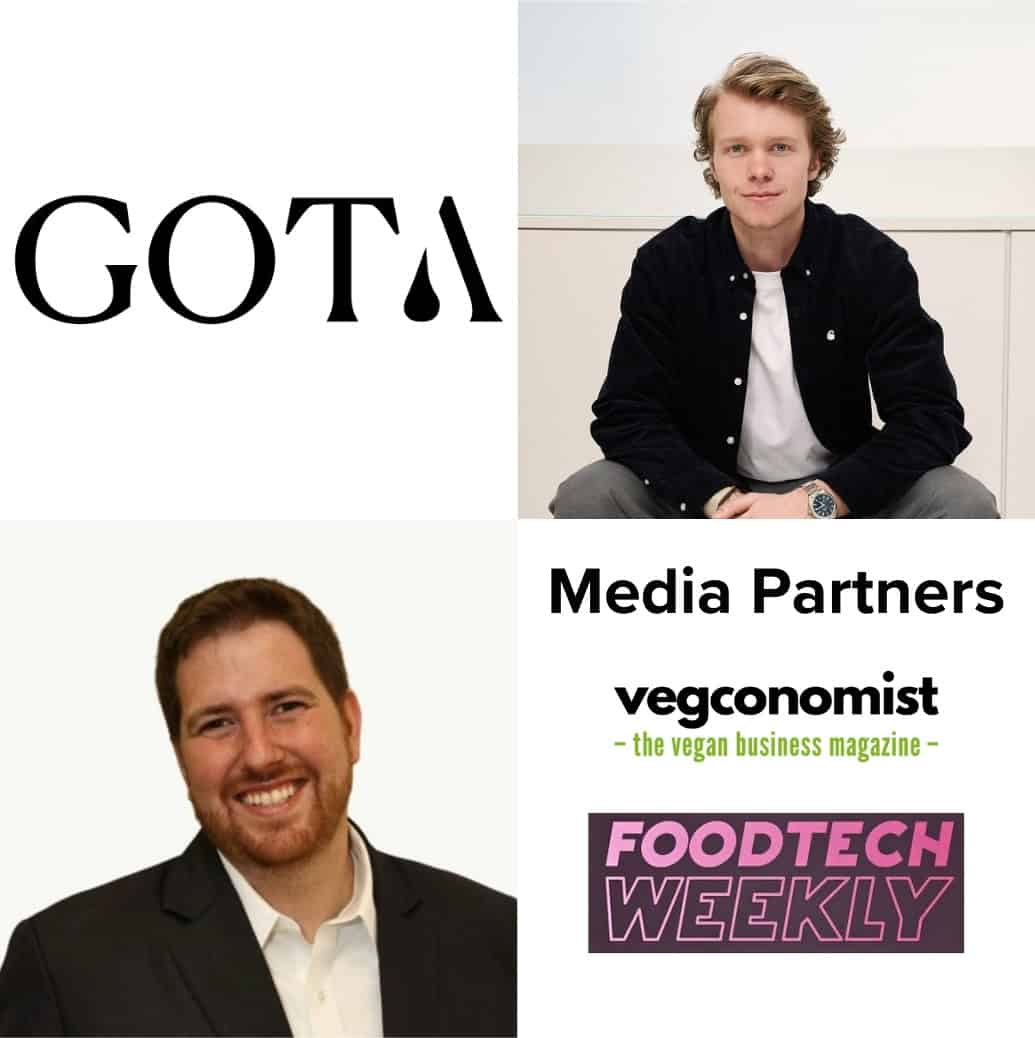
In this podcast series, Alex Shandrovsky interviews investors about benchmarks for funding Alt Proteins in 2025 and uncovers the investment playbooks of successful Climate Tech CEOs and Leading VCs.
Podcast Host Alex Shandrovksy is a strategic advisor to numerous global food tech accelerators and companies, including alternative proteins and cellular agriculture leaders. His focus is on investor relations and post-raise scale for agrifood tech companies. This podcast is syndicated through our media partners, Foodtech Weekly and Vegconomist.
Episode 67: GOTA Ventures
In this episode, I sit down with Vincent Kuiper, Co-founder of GOTA Ventures, a European investment syndicate disrupting the traditional VC model. Vincent explains why launching a traditional fund as an emerging manager is broken in the current climate and how he utilized the syndicate structure to aggregate over 50 industry experts from 13 countries. We dive into the mechanics of “deal-by-deal” investing, how to monetize without a management fee, and GOTA’s hybrid thesis that balances 12-year deep tech timelines with the faster liquidity of consumer brands. Listen to the full episode to hear how Vincent turned his MBA thesis into a live investment vehicle that targets 8 high-conviction deals a year.
Key Facts GOTA Ventures:
- Goal: To build the strongest ecosystem in Europe for food tech investing by lowering the barrier to entry for industry experts.
- Milestone: Successfully launched a syndicate with 50+ active investors (operators, scientists, executives) investing €150k-€500k per deal.
Alex’s Top Findings:
The Syndicate Advantage: Speed and “Smart” Access. For emerging managers, raising a fund is expensive and slow. Vincent argues that the syndicate model allows for agility and, crucially, democratizes access. By lowering minimum tickets (to ~€5k), GOTA unlocks capital from industry scientists and operators who have deep expertise but cannot write the €250k check required by traditional LPs.
“As an emerging manager, it’s simply easier to raise capital for a specific deal than for a fund… We have industry operators, executive scientists, all these kinds of experts that don’t have the capital to join a VC fund as an LP, but they do have the capital to join… with lower ticket sizes.”
Aligned Economics: The “No Management Fee” Model. Unlike traditional VCs charging a 2% annual fee regardless of performance, GOTA operates on a lean “Closing Fee + Carry” model. This ensures the GPs are fully aligned with the investors—they only make real money if the portfolio companies exit successfully.
“The closing fee basically covers our expenses and nothing more than that. So we are fully aligned with our investors that we really need to look for upside in our investment opportunities.”
The Hybrid Thesis: Balancing Deep Tech with CPG. GOTA takes a contrarian approach by mixing deep tech (Ingredient Innovation/Infrastructure) with Consumer Brands. Vincent explains this is a deliberate portfolio construction strategy to balance the 10-12 year horizons of deep tech with the potentially faster (5-7 year) exits of consumer goods, offering liquidity diversity to angels.
“We combine tech-heavy investments with consumer brands… With the consumer brands, your exits are probably between five to seven years. With the more deep tech plays it’s 10 to 12 years and we really believe that the opportunities are in both areas.”
Link to Apple Podcast here.
Catch the full podcast series here.