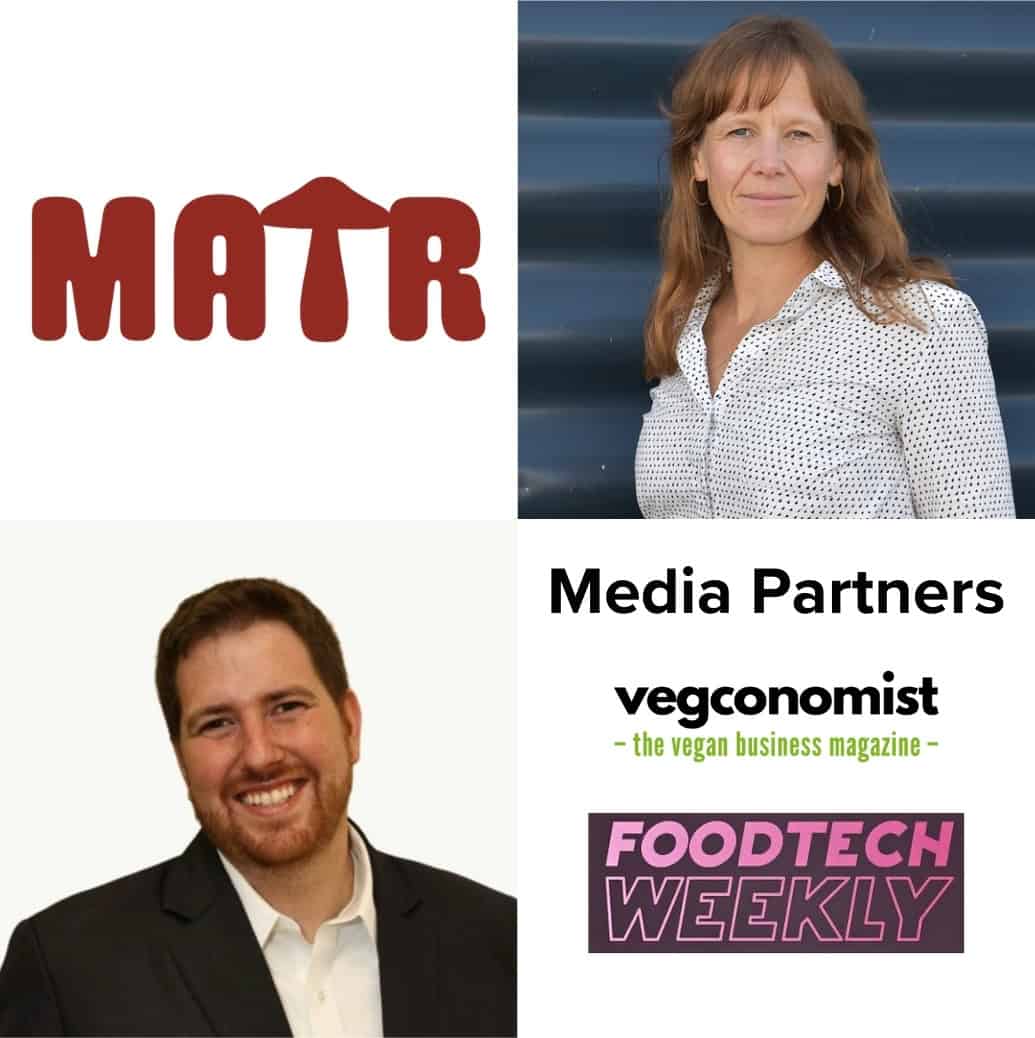
In this podcast series, Alex Shandrovsky interviews investors about benchmarks for funding Alt Proteins in 2025 and uncovers the investment playbooks of successful Climate Tech CEOs and Leading VCs.
Podcast Host Alex Shandrovksy is a strategic advisor to numerous global food tech accelerators and companies, including alternative proteins and cellular agriculture leaders. His focus is on investor relations and post-raise scale for agrifood tech companies. This podcast is syndicated through our media partners, Foodtech Weekly and Vegconomist.
Episode 66: Matr Foods
In this episode, I sit down with Randi Wahlsten, CEO and Co-founder of Matr Foods, a Danish startup that just secured a massive €40M Series A led by Nova Holdings and the European Investment Bank. Randi reveals how she moved from a pilot line in an old fish factory to funding a “First of a Kind” (FOAK) industrial facility. We discuss why Matr Foods rejected the asset-light CDMO model out of necessity, how they achieved an 80-90% repurchase rate by targeting high-end culinary partners first, and why the future of the industry isn’t “meat substitution” but creating entirely new food categories focused on gut health and fiber. 🎧 Listen to the full episode to hear Randi’s strategy on pricing for profitability rather than “fake success.”
Key Facts Matr Foods:
- Goal: To create a new category of fungal-fermentation food that is clean-label and fiber-rich, rather than a direct “meat mimic.”
- Milestone: Closed a €40M Series A (Equity + Debt) to build a proprietary industrial-scale production facility.
Alex’s Top Findings:
- Your lead investor might come from a “non-fundraising” moment. Randi didn’t meet Novo through a formal intro or a classic pitch meeting. It started because she joined a debate/panel and did a short pitch in that setting. Afterward, a Novo investor approached her and said, “Let’s talk,” and that opened the door. “ I was asked to participate in a debate where I needed to do a little bit of a pitch for a panel, and one of the people on the panel was a Nova Holdings investor, and he came up to me afterwards and said, ‘That’s really interesting. Let’s have that conversation,’ and that really is how it started. I would normally never think that those kinds of setups would lead to anything, but in our case, it did.”
- CapEx wasn’t a strategic preference. It was forced by reality. In a climate where investors love “asset-light,” Matr Foods went heavy. Randi explains that for novel fermentation technologies, the CDMO capacity simply doesn’t exist yet. By building their own facility, they secure IP, speed of innovation, and long-term margin control that third-party manufacturing can never offer. “We looked at the market very thoroughly across Europe… and we couldn’t find anyone anywhere who had facilities that would be close to ready to produce the product… It was by necessity that we said then we’re gonna have to scale this technology ourselves.”
- The “Quality of Revenue” Metric. With limited pilot volume (20-30 tons), Matr couldn’t rely on massive sales data to raise its Series A. Instead, they focused on who was buying (aspirational brands like Gasoline Grill) and the repurchase rate. Proving that 80-90% of chefs re-ordered was more valuable than vanity metrics from deep discounting. “You can make a fake success by putting it out in the market at half price… but that’s not really proof of anything. We’ve seen… between 80 and 90% repurchase rate. So we’ve seen, once they’ve tried it, they’re coming back.”
Link to Apple Podcast here.
Catch the full podcast series here.