In this podcast series, Alex Shandrovsky interviews investors about benchmarks for funding Alt Proteins in 2026 and uncovers the investment playbooks of successful Climate Tech CEOs and Leading VCs.
Podcast Host Alex Shandrovksy is a strategic advisor to numerous global food tech accelerators and companies, including alternative proteins and cellular agriculture leaders. His focus is on investor relations and post-raise scale for agrifood tech companies. This podcast is syndicated through our media partners, Foodtech Weekly and Vegconomist.
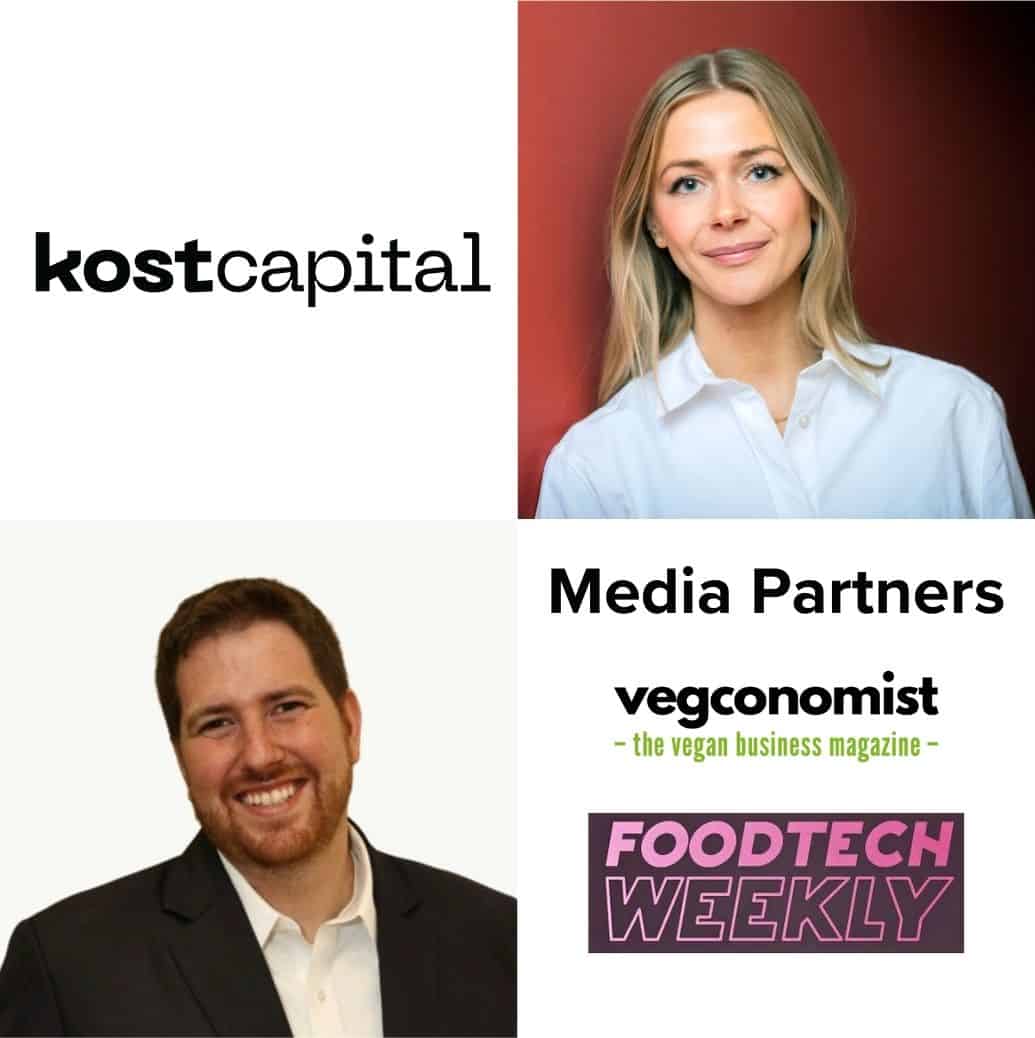
Episode 71: Kost Capital: Bodil Sidén on the “Trojan Horse” B2B strategy and redefining the VC Power Law
In this episode, I sit down with Bodil Sidén, General Partner at Kost Capital, a Copenhagen-based €20M early-stage venture fund and food tech studio. Bodil explains why the first wave of food tech struggled by focusing on low-margin B2C outputs, and why Kost Capital’s playbook revolves strictly around high-margin “inputs” (ingredients and enabling tech) functioning as “Trojan horses” for the existing food industry. We discuss their unique venture studio model—building “inception cases” from scratch in their basement test kitchen—and why €250k–€750k pre-seed checks are the perfect vehicle to co-lead deals alongside generalist VCs. Bodil also breaks down her thesis on the convergence of GLP-1s, wearable health tech, and the functional food transition, sharing insights from recent investments like Amass and Nordic Biofoods.
Listen to the full episode to hear why Bodil is actively looking for “insanely impatient” founders who aren’t afraid to stalk their customers.
Key Facts Kost Capital:
- Goal: To invest in high-margin B2B inputs (ingredients and enabling tech) that drive the global nutrition transition without forcing mass behavioral change.
- Milestone: Successfully launched a €20M fund backed by strong anchor investors, including EIFO (the Danish Sovereign Wealth Fund), featuring an integrated in-house test kitchen and team of chefs to incubate startups.
Alex’s Top Findings:
The “Trojan Horse” Strategy: B2B Inputs over B2C Outputs. The era of launching low-margin, capital-intensive B2C meat alternatives is challenging. Kost Capital focuses on high-value ingredients (colorants, texturizers, Omega-3s) and enabling software that plugs directly into the existing 95% of the food industry. This avoids the need to build expensive new factories or fight food giants for grocery shelf space. “We don’t really take a bet on new behaviors or anything, but want to improve what’s already on the plate out there… If you look at the outputs that often have very low margins and that are competing with large food corporates with sort of insane distribution and marketing budgets… it just doesn’t really add up.”
Redefining the VC “Power Law” for FoodTech. For a €20M fund, you don’t need a single 100x unicorn IPO to return the fund. Bodil argues that the FoodTech exit market relies heavily on trade sales and acquisitions by massive food corporates. By utilizing their venture studio to mitigate early risk, Kost Capital can target highly realistic acquisition sizes while maintaining a healthy fund return. “The advantage of having a 20 million fund is that to have a fund returner, you need obviously a smaller exit… in the food space, if you look at the exit market, it is often a trade sale or like an acquisition… we also have an opportunity to mitigate a little bit more and have a few more actually pretty solid exits across the portfolio.”
Customer Stalking over “Dusty IP.” Too many deep-tech founders fall in love with their lab research without actually testing market demand. Bodil emphasizes that food tech founders must adopt the scrappy, rapid-iteration mindset of software or D2C fashion brands. You have to prove someone will pay for your solution before spending years in R&D. “The danger with many IP-driven companies is that you are so deep into the research that you never talk to your potential customers… I look for founders that already, before they’ve started developing whatever product that is, know exactly what stakeholders they should be stalking… Learn from fashion. Learn from cutting-edge industries… See, does anyone want this?”
Link to Apple Podcast here.
Catch the full podcast series here.