Finnish food technology company Solar Foods has joined BalticSeaH2, a large-scale EU-funded hydrogen initiative, receiving €350,000 to increase production capacity of Solein at its Factory 01 facility in Finland.
BalticSeaH2 is a five-year project launched in June 2023 with a total budget of €33 million, of which €25 million comes from the EU’s Clean Hydrogen Partnership under RePowerEU. The consortium spans 40 partners across nine Baltic Sea countries and is designed to build what it describes as the largest cross-border hydrogen valley in Europe, covering more than 20 industrial use cases across multiple sectors.
Hydrogen in food protein production
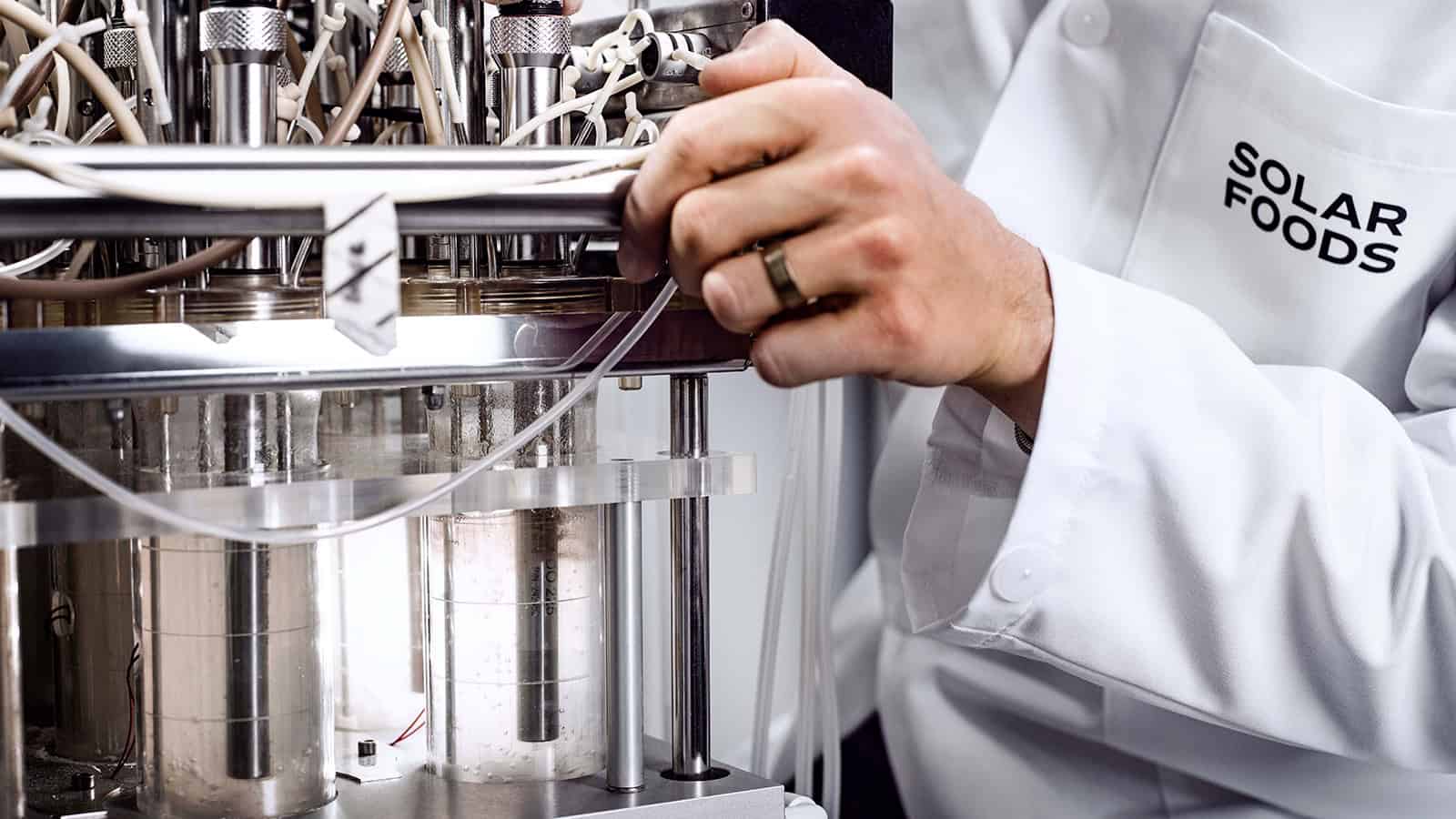
Solar Foods’ involvement centers on one of those use cases: the application of hydrogen in food protein production. Solein is made through gas fermentation, a process that uses hydrogen and carbon dioxide as primary inputs rather than conventional agricultural feedstocks. At Factory 01, hydrogen is generated on-site via an electrolyzer that splits water using renewable electricity.
Scaling toward Factory 02
The €350,000 allocation supports further capacity development at Factory 01, which currently has an annual output of 160 tons of Solein. Solar Foods is separately planning a second facility, Factory 02, intended to scale annual production to 6,400 tons. The company has said external partners will handle hydrogen production at Factory 02, allowing Solar Foods to concentrate on its gas fermentation technology and commercial expansion.
Solar Foods received its first regulatory approval for Solein in Singapore in 2022 and has since been pursuing novel food authorization in other markets. Commercial scale remains the central challenge, and Factory 02 will be a key test of whether gas fermentation can be produced at costs competitive with more established protein sources.
Petri Tervasmäki, Chief Technical Officer of Solar Foods, said: “We are excited to join BalticSeaH2 and be a part of developing different value chains and sector integration in the hydrogen economy. Hydrogen is one of the main raw materials in our production, and we are very proud to be the global frontrunners in bringing the hydrogen economy also to the food industry and protein production.”