Montreal-based Opalia has closed an initial $3.2 million CAD seed round to advance its cell-based milk platform, having already secured paid pre-commercial pilot agreements with several established dairy players before reaching market.
The round was led by Nàdarra Ventures, with participation from Spring Capital, UCEED, and Anges Quebec, alongside existing backers Investissement Québec, Cycle Momentum, and BoxOne Ventures.
Whole milk without the cow
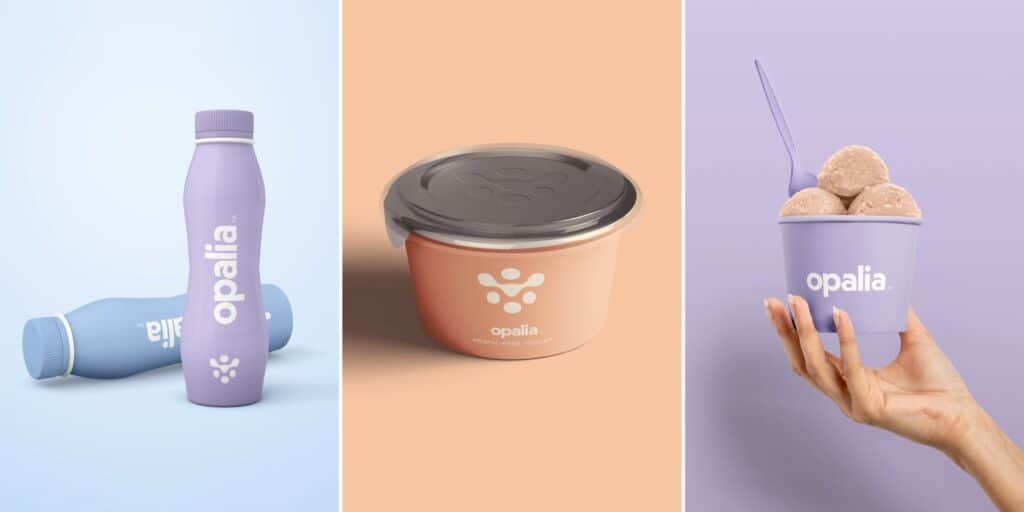
Opalia uses mammary cells cultivated in bioreactors to produce complete milk, including its proteins, fats, and sugars, rather than isolating individual components. The company positions this as a distinction from precision fermentation approaches, which typically produce single milk proteins that require formulation into finished products. Opalia’s output is designed to function as a direct drop-in for conventional fluid or powdered milk, usable in cheese, butter, and ice cream without reformulation.
The company is targeting the global dairy market, valued at $1.06 trillion, through a B2B licensing and supply model rather than direct-to-consumer sales.
Paid pilots with major dairy players
Opalia has signed paid pilot agreements with Hoogwegt, the world’s largest independent dairy supplier, structured as a two-year commercial partnership, and with the Canadian division of a leading global dairy group. Partnerships currently span five countries across three continents.
“We’ve moved beyond proving the science at laboratory scale, now it’s all about scaling and proving commercial viability. With real commercial partners already at the table, we’re building the infrastructure for cell-based dairy to compete globally, not just conceptually,” stated Jennifer Côté, CEO and Co-Founder of Opalia.
“Global demand for dairy is outpacing supply”
Funding will go toward scaling a modular bioreactor system, with a commercial launch targeted for 2028. Regulatory filings are already underway in North America, with European and Asian submissions to follow.
Lead investor Nàdarra Ventures framed its rationale around supply-side pressure. “Global demand for dairy is outpacing supply, and the traditional system is under increasing pressure from climate and resource constraints. While regulatory pathways will take time, we view them as a matter of when, not if,” said Mary Dimou, Managing Partner at Nàdarra Ventures.