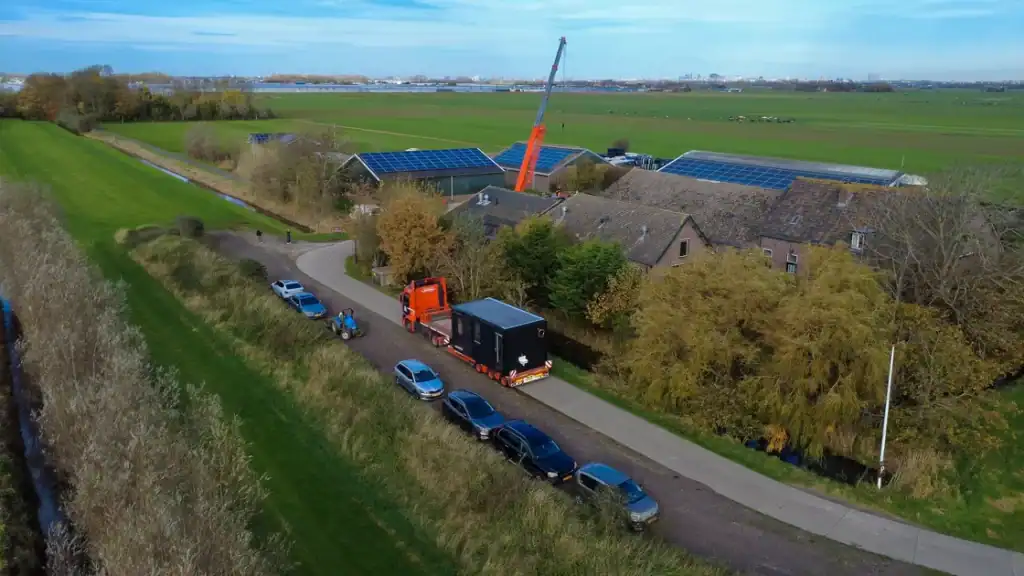
A working farm in Zuid-Holland, the Netherlands, is now equipped to produce cultivated meat thanks to a collaboration between RespectFarms and dairy farmer Corné van Leeuwen. The project, which is claimed to be a world first, is supported by the European Innovation Partnership for Agricultural Productivity and Sustainability (EIP-Agri) and the Province of Zuid-Holland.
The cultivated meat units will become operational in the coming weeks, demonstrating how farmers could integrate the production of cultivated foods into their existing operations. Through the collaboration, van Leeuwen has reportedly become the first farmer worldwide to receive agricultural funding for cultivated meat production. This is thanks to EIP-Agri, which aims to connect farmers, researchers, and businesses to accelerate agricultural innovation across Europe.
“As a farmer, you have to look ahead, especially these days,” said van Leeuwen. “This is a chance to see whether a new income model can fit alongside what we already do. Making cultivated meat on the farm makes sense for many reasons. Not trying it would be a missed opportunity.”
A fair and transparent protein transition
RespectFarms is a startup supporting a farm-integrated approach to cultivated meat production, rather than large centralised facilities. By introducing advanced agritech to farms, the company hopes to contribute to the development of more resilient food systems and strengthen the economic foundations of rural communities.
An Experience Centre is set to open at van Leeuwen’s farm in the spring of 2026, with the aim of fostering public engagement and transparency. The centre will engage with farmers, value chain stakeholders, and policymakers, while inviting local communities and educators to see cultivated meat production for themselves.
Plans to establish a cultivated meat farm in the Netherlands were first announced in September by the international CRAFT Consortium, which comprises RespectFarms, Wageningen University & Research, Mosa Meat, Aleph Farms, Multus, Kipster, and Royal Kuijpers.
“We’re building a model where livestock farmers remain at the centre of food production, not replaced by factories,” said Ira van Eelen, co-founder of RespectFarms and Cellular Agriculture Netherlands. “This is an opportunity to make the protein transition fair, transparent, and rooted in rural communities.”