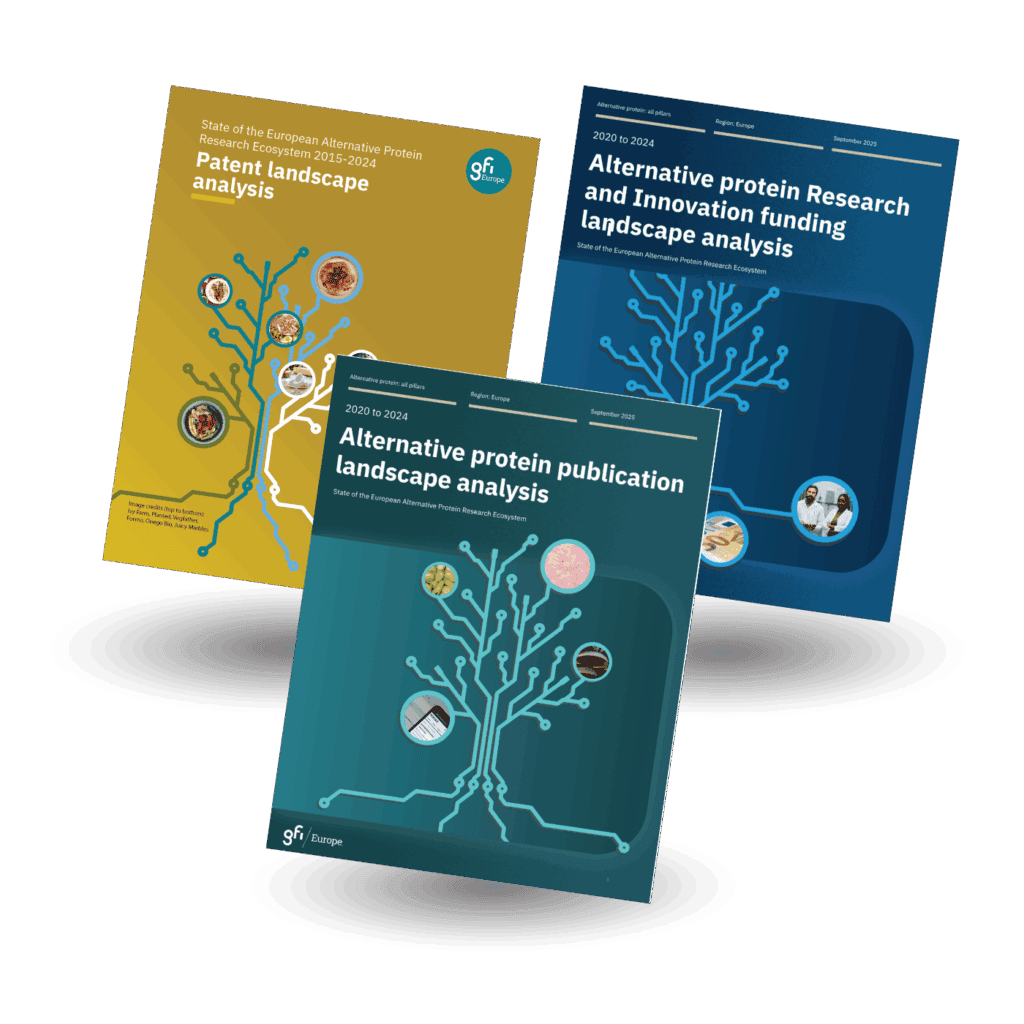
A new analysis by GFI Europe has found that alternative protein research in Europe is growing at a rapid rate. Since 2020, the number of studies published and the levels of public funding received have almost tripled.
Last year, 798 academic research papers were published examining plant-based foods, fermentation-made foods, and cultivated meat or ingredients; this figure is up 282% compared to 2020. Furthermore, public funding for the field expanded from just over €80 million in 2020 to a record €320 million in 2024, representing a 296% increase. Consequently, research and innovation funding has grown by an average of 44% per year in the first half of the decade, while scientific publications have increased by 30% per year.
Germany was responsible for the most publications at 368, followed by the Netherlands at 363 and the UK at 349. Denmark published the highest number of papers per million inhabitants, followed by Ireland and Finland.
The UK has funded the most research, investing €127 million since 2020. This has included establishing a series of alternative protein research centres. Denmark is a close second at €126 million, following its 2021 commitment to advance plant-based foods to benefit the climate. The Netherlands is in third place at €77 million, while the European Commission is the region’s largest funder, having invested €308 million since 2020. Most of this originates from the EU’s flagship Horizon Europe research programme, though some is from the European Innovation Council (EIC).
“A sector on the rise”
The report finds that alternative protein researchers are beginning to receive investment from new sources, including more than 67 independent bodies representing 22 countries across Europe. Global funders have also contributed, with 12 of these making their first investment in 2024.
While countries in western Europe currently dominate the field, this is beginning to change; Estonia and Poland were the sixth and seventh-highest investors per capita in Europe over the last five years, with most of this funding awarded last year.
Since 2020, most research funding has gone towards plant-based foods. However, research into modern methods of fermentation, such as precision fermentation, was the highest funded area last year; scientists received more than €100 million. Fermentation research funding has grown 77% year-on-year, compared to 27% for plant-based foods.
“This analysis paints a picture of a sector on the rise – with a rapid increase in both public funding and publications across Europe,” said report co-author Dr David Hunt. “With most of these investments having been made in the last three years, we can expect to see researchers publish an even greater volume of innovative findings in the near future.”